
Power Steering Pulleys: What to Know
Power Steering
A complete guide to March Performance power steering pulleys: types, sizing, fitment, and how to choose the right pulley for your accessory drive system.
The power steering pump pulley is one of the most overlooked components in an accessory drive system, but it plays a critical role in both performance and reliability. March Performance has been engineering power steering pulleys for over 25 years, and here's what you need to know when selecting one for your build.
How Power Steering Pulleys Work
The power steering pulley is press-fit onto the pump shaft and driven by the serpentine belt or a dedicated V-belt depending on your system configuration. Its diameter relative to the crank pulley determines how fast the PS pump spins. Which affects both steering assist feel and the parasitic load on the engine.
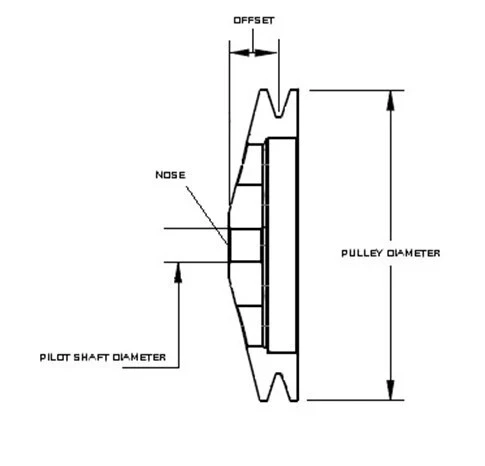
Pilot shaft diameter, pulley diameter and offset together decide whether a pulley will line up.
Serpentine vs V-Belt Power Steering Pulleys
March Performance offers power steering pulleys for both serpentine and V-belt systems:
- Serpentine PS pulleys: use a multi-rib serpentine belt groove, typically 6-rib. These are part of March's all-inclusive serpentine systems and are designed to work in precise alignment with the rest of the system
- V-belt PS pulleys: single groove pulleys for traditional V-belt setups. Available in single and double groove configurations depending on whether the PS pump is part of a shared belt run or has its own dedicated belt
Groove Configuration
When selecting a power steering pulley, groove configuration matters:
- Single groove: used when the power steering pump has its own dedicated belt, separate from the other accessories
- Double groove: used when the PS pump drives another accessory (like the alternator) off a secondary belt
- Serpentine groove: used in modern serpentine conversion systems where all accessories share one belt
March Performance's system kits include the correct PS pulley configuration for your application. If you're sourcing a replacement pulley, verify your groove configuration before ordering.
Press-Fit Installation
Power steering pulleys are press-fit, not bolted: onto the pump shaft. This means you need the right tools to install and remove them correctly:
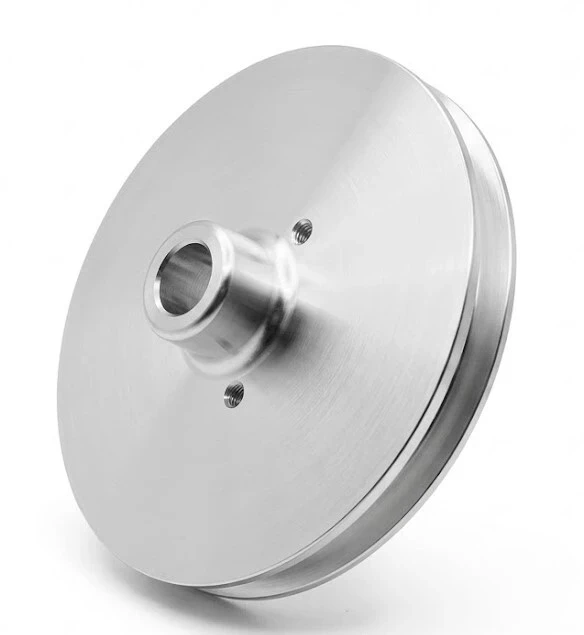
Press fit: a smooth bore that is pressed onto the shaft. Offset is set during installation.
- A PS pump pulley puller to remove the old pulley without damaging the shaft
- A PS pump pulley installer to press the new pulley on to the correct depth
- Never use a hammer to install or remove a PS pulley: you will damage the pump shaft or the pulley bore
The correct installed depth is critical. Too shallow and the belt won't align properly. Too deep and you risk interference with the pump body. March Performance pulleys are machined to precise dimensions that match the correct installed depth for each application.
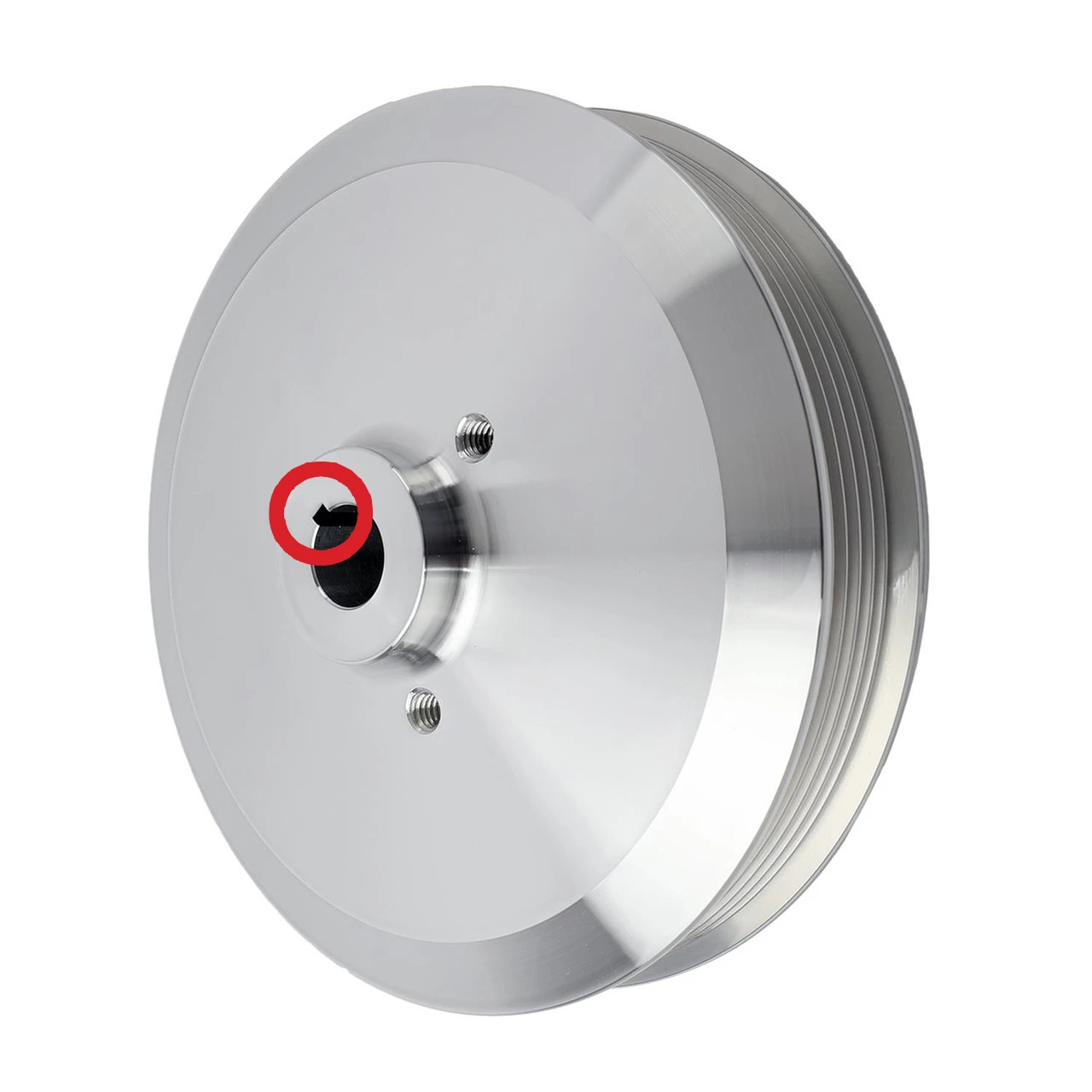
Keyway: a square key locates the pulley and a nut retains it. Offset is fixed.
March Performance Power Steering Pulleys
All March Performance PS pulleys are CNC machined from 6061-T6 aircraft-grade aluminum with a clear powder coat finish. No polishing required. High wear surfaces are hard coated to 65 Rockwell C scale, harder than steel, ensuring long service life even under continuous load.
Browse power steering pulley options for your application in our Small Block Chevy, Big Block Chevy, Chevy LS, and Ford Small Block pulley sections. Questions? Call 1.888.729.9070.
Still stuck?
Free product support for the life of the product. Talk to a real person.
Monday–Friday, 8:30am–5:00pm EST
On this page